




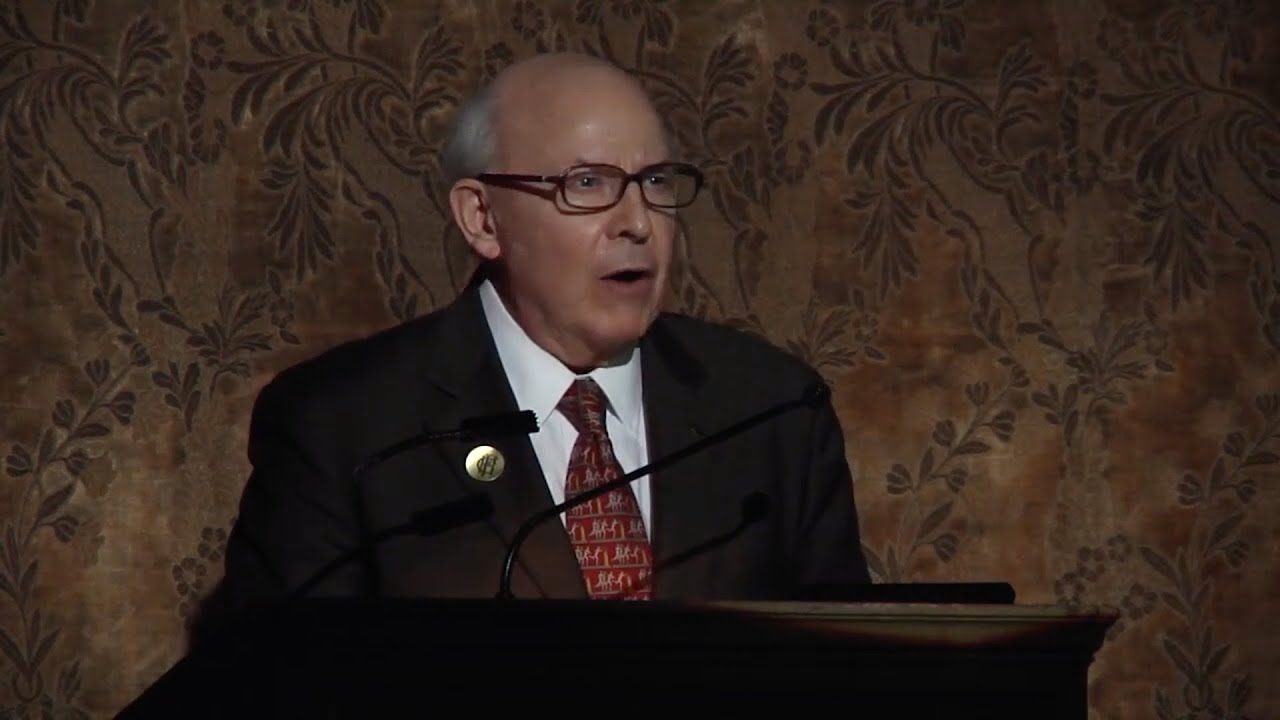
– Really early in our planning, we understood that it would certainly
be very important for us to have a speaker below among us that can notify us with some authority what it resembled to be a.
banker during these various centuries of our tale, because, undoubtedly, to be a Piero de’ ‘ Medici was various from being a Robert Lehman, and it is because of that.
that we” ve transformed to Richard Sylla to aid us acquire that firmer footing on.
that element of our subject. Richard Sylla is the.
Henry Kaufman Professor of the Background of Financial.
Markets and establishments and teacher of business economics at the Stern School of Service.
of New York City University. He is likewise a research study associate.
B.A., M.A., and PhD levels
from Harvard University, and his research research study is.
He is a previous editor of the. Journal of Economic History and has offered as chairman of the board of the Trustees of the Cliometric Culture, I hope I” m saying that right, and Association of.
Measurable Historians. You can tell I” m a little. out of my deepness here.
As head of state of the Economic.
Background Organization, the professorial company. of economic chroniclers in the USA, and as president of the.
Organization History Seminar, the leading specialist.
association of business historians, which likewise presented him.
with its lifetime accomplishment award.Richard is a fellow of the. American Academy of Arts
and Sciences, and currently works as the.
chairman of the Board of Trustees of the Gallery.
of American Financing, a Smithsonian associate.
situated in Wall Road, right here in New York. He is the author of “” The.
American Funding Market, “” Eighteen-Forty 6 to Nineteen Fourteen,”” and co-author of “” The Evolution.
of the American Economy,”” published in 1993, and “” A Background of Rate Of Interest,”” that could interest us, (chuckles), that was, that is in its fourth edition in 2005. He” s the co-editor of.
“” Patterns of European “” Automation in the 19th Century: “” The State, The Financial.
System, and Economic “” Modernization,”” and of “” Establishing Choices:.
American Economic Policy “” in the 1790s,”” along with numerous essays,.
posts, and reviews in company, financial, and.
financial history publications. This mid-day, Richard.
will certainly offer us this historical point of view that I, for one, badly require on what it was like to be.
a lender at various minutes in history, in his discussion, “” The Art of Financial Considering That the Medici.”” Please join me in welcoming Richard Sylla.
( target market applauds) – A great lender needs to always have a.
supply of liquidity close by. (audience laughs) And that” s true of a teacher. Inga, thanks for those kind comments. And, I intend to thank the.
Frick for inviting me to be right here today. I” ll simply dive right in, I have a Power Point.
presentation that doesn” t have a great deal of artwork in’it. It ‘ s got a couple of securities in it, yet very little artwork. You ‘ re going since.
to obtain a lot of that in the seminar that I” m. mosting likely to stay away from it.So, initial slide. I intend to claim the banks, for centuries, have played a vital role.
in financial development. Obviously, I teach at the Stern School. I try to mention that.
the nations that had the most established banks and.
truly the most industrialized financial systems, early on, were the ones that were.
effective in modern-day history. The northern Italian city.
states are an instance, and what I noted below was that, these city states of north Italy, about 5, 6, 7 a century earlier, created modern banking, innovated it, and they additionally innovated double-entry accounting.
“” Banco”” as a few of you might understand, is the Italian word for.
“” bench”” or a tiny table, and the, the brand-new kind of entrepreneur in background showed up in those north.
Italian city states between Ages. He would certainly feature his little table, or bench, and he would open his.
account books on there, and on one side, he would certainly.
take deposits from people, pay them some rate of interest. On the other side, he would certainly.
make lendings to various other individuals, charge them a somewhat.
greater rate of interest and survive on the spread, and since one of the most apparent.
point that this brand-new entrepreneur had to identify him was the little table or bench, the banco, he got to be called a banchiere, and the word infect.
Germany and England, banquier in French, and so forth, and so that” s several of the early history of banking.By the time we take it. up, I think the Italian city states were the wealthiest. economic climates worldwide.
They ‘ d had banks for a number of centuries, the Medici Financial institution was by.
no implies the initial financial institution in the 15th century, and those, we have some data, rough data I” m sure, however they indicate that.
north Italy was the richest economy worldwide, around 1500 or so, and certainly, we recognize that that banker well sponsored art. Instances? We” ve listened to concerning both of.
my examples below today, the Medici Bank was a bank.
that lasted not quite 100 years from 1397 to 1494, and the other example, which.
was just mentioned by David, the Monte dei Paschi of Siena, which was, you know, it” s not the earliest financial institution worldwide, it ‘ s the
oldest financial institution in the. globe that still exists. It might not exist’a lot longer, so we ‘ ll have to maybe. be trying to find one more financial institution that ‘ s the oldest bank worldwide that still exists, pretty.
soon, since as David stated, it” s entered into a little bit of mischief lately.But, 1472, it” s well over 500 years old. Now, the Italians were the innovators. Financial spread from Italy, the Dutch Republic, even previously in the reduced countries when they were nests of Spain, or the Holy Roman Empire, the Dutch Republic improved and took on on some of the Italian monetary.
technologies around 1600. They developed something of a reserve bank called the Financial institution of.
Amsterdam which was started in 1609. The Amsterdam Beurs or Stock Exchange was founded around the same time and the Dutch were beginning to prepare. It was also in 1609 that the Dutch sent an English skipper called Henry Hudson to discover, and he entered into New York Harbor, and so you see three big occasions of 1609, the Financial institution of Amsterdam, the Amsterdam Beurs and the.
Dutch East India Business employing Henry Hudson to.
concerned explore New York, what we understand currently as New York Harbor, and after that the 1620s, an additional Dutch company, the Dutch West India Firm really placed a settlement.
on Governors Island and later on reduced Manhattan, so this is early in the 17th century, and, some years later, the Dutch have their Golden Era, or what.
the chronicler Simon Schama has called the Shame of Treasures, and we understand that the.
Dutch masters thrived in the center component of the 17th century, however the financial came initially, so the factor I intend to make.
And England enhanced and adjusted upon the Dutch monetary developments. The Financial institution of England was.
even more of a contemporary bank than the Financial institution of Amsterdam was. It was established in 1694. England then went on, with these economic advancements that involved things like.
The government bond market and supply market.
as the Bank of England and London Bankers, England took place, sometime, some decades later, in the middle of the 18th century, to have the Industrial Transformation and a realm all over the world, and, a few of the lenders who were.
know the funding of that, as we” ll see, ended up being art collectors.Now, we, quickly to the United States, Americans, after Freedom, were, picked up the banking behavior pretty quickly and I assume the crucial individual below, a person who I spent a.
great deal of my time studying is Alexander Hamilton that.
we wear” t give enough credit score for his payments to our country. This is a quote from Hamilton. In 1781, when there was not.
any kind of bank in the USA, there had actually never ever been a genuine,.
modern bank in the USA. In 1781, Alexander Hamilton.
was a lieutenant colonel in the Continental Army, he was just around 24, 25 years old, and, he was the right-hand.
male of George Washington, as his aide-de-camp, yet he creates in a.
letter to Robert Morris, at the time, Morris had actually ended up being selected the financier of the.
Superintendent of Financing, they called him, of the USA, this sought the continental.
currency that they provided generally came to be valueless, and Morris was brought in.
to attempt to bring some feeling of security to very unsteady finances, so Hamilton, constantly giving.
other individuals recommendations, creates him a letter. And because letter he states, the tendency, bear in mind, this is a time when.
there has not been a bank in the USA.
“” The propensity of a national.
bank is to raise “” public and personal credit report. “” The former enables to the state, “” and the latter facilitates.
and expands the procedures “” of commerce among people.”” Hamilton wanted building a solid government, and he was interested in.
developing a solid economic situation, and he believes that banks are the essential to that. The exclusive credit score “” industry is enhanced, “” products are multiplied, “” agriculture and suppliers thrive, “” and herein is composed the.
true wide range and success “” of a state.”” And after that this next paragraph.
has what I believe is one of my wonderful Hamilton favored quotes. “” Most industrial nations.
have located it needed “” to set up banks, and.
they have actually proved to be “” the happiest engines.
that ever before were created “” for progressing profession, “” Venice, Genoa, Hamburg, Holland, “” and England are examples.
About a years after Hamilton created this, he was put in the placement. This is the most significant and.
Hamilton” s technologies, but they pushed it to great sizes, and this is from the 1830s. A man named Roger B. Taney, that” s the assistant of the treasury in the 1830s, some decades later on, he ‘ s the Chief Justice. of the High court, and issued the Dred Scott.
Choice which was not his most valuable point, however in the 1830s, as Andrew.
Jackson” s treasury secretary, Taney says, “” There is maybe no service “” which produces an earnings.
Liberal and particular “” as the organization of financial and exchange, “” and it is appropriate that it.
ought to be open regarding “” achievable to most free enterprise “” and its benefits shared.
by all classes of culture.”” This was sort of something new. Everyone must have.
the right to be a lender, anyone can be a lender. At the time, the united state didn” t have absolutely no banks, like it did when Hamilton created, it had about 4 or five hundred banks, and after that I take place to aim out right here, by the early 20th century, 1913, the U.S.Had tens
.
of hundreds of financial institutions and roughly 40% of the.
entire globe” s bank down payments. Like the Italians, the Dutch,. and the Brits prior to them, the Americans parlayed. their financial into economic leadership and excellent riches. All right, currently right here comes.
business institution lecture. The, I said in the really starting that north Italy originated in financial, yet they likewise spearheaded in.
double-entry accounting. I simply reviewed a book recently,.
it” s type of intriguing because ideal outside the door, there” s this terrific Piero.
della Francesca exhibit, and he was from a town in Italy called Borgo San Sepolcro. An additional individual from that.
town was Luca Pacioli that overlapped with Piero. Pacioli in fact, in.
his popular book of 1494, called him Pietro di Francesci, and Piero, the musician whose.
work is included outside, was fairly a mathematician, and created publications regarding maths and the perspective of art, you recognize, I imply his mathematics was routed toward improving art, and some people assume that Pacioli discovered a whole lot of math.
from the painter, Piero, and he certainly thanked him in his publication, but Pacioli” s renowned chapter type of codified double-entry accounting which was one more northern.
Italian advancement, and, double-entry bookkeeping.
and a bank annual report might look something like this, so right here” s the,
you ‘ re all M.B.A.s now. (audience laughs )An equilibrium sheet of a bank has its responsibilities and possessions. You start in the reduced right there, state some capitalists in the.
financial institution invest some resources in the financial institution, I” ll call it 200 here’, it. doesn ‘ t matter what the cash units are, and they open the financial institution to take deposits and quite soon
, individuals. been available in and down payment 800 with them, and you obtain a total of 1,000 and for the sum of the liabilities, and the total assets, the.
resources is the internet worth of the financial institution. Exactly how are those possessions deployed? Well, over on the other.
side, you see they” re going to have cash money reserves of 100.

That” s since some of those depositers are going to be available in at some point and ask for cash money, and take money out of the bank, but of program other individuals.
will be bringing money to the bank so you don” t. need to have cash money books equivalent to the overall of down payments, and actually, below I” ve obtained, what? 800 of down payments and only.
100 of cash books, however the actual fun in financial.
comes from making lendings and making financial investments and I” ve provided you some instances. This bank is going to make 700 of car loans and 200 of financial investments, and you add that to the cash money reserves and you have 1,000. The publications have to balance.
in double-entry accounting. Now, I” ve simply made some assumptions concerning the rate of interest made.
It” s going to be 8
%. They ‘ re going to pay 2% to the depositers for the usage of their money.
Banker, with his bench by the Rialto Bridge in Venice, opened up his books and.
he paid money for down payments and likewise made loans and.
charged a higher rate, well, that” s what I ‘ m revealing here. if you think those rate of interest rates and the quantities of possessions.
you see you” re going to gain 56 a year on your fundings, you” re mosting likely to gain 12.
On the various other side, you have to pay out 16, and you” re paying 2% on the deposits, so that” s going to give you
. I ‘ m just calling them 20 here, and then you finish up, in the reduced left, with a revenue of 32, and
when you relate associate to the. And that” s, that ‘ s what so captivates.
individuals about banking. That” s why many, when Roger Taney claimed every.
American ought to be a lender, a great deal of him took him up on the concept. All. Well, that” s, this is a respectable bank, you understand, 16% return on funding. However there ‘ s some. lures included below. Just how, you understand, if you intend to think of it, how could you make more money in banking? What would be a good.
Well, one means, that we state, you have all that resources there, but if you can obtain by with less capital, then you might, you understand, utilizing the leverage of down payments, you could make a greater return. One more point is, you might, you understand, desire to claim, well, those money reserves, they” re not gaining that much for us, maybe earning nothing.
numerous cash reserves and put them into investments, so I” m going
ahead up.
with an additional financial institution here.Basically, it” s the very same sort of story, but this bank is currently going.
to have not 800 of deposits yet 900, and that suggests it” s going. to reduce its funding to 100 complete assets, or complete liabilities are still 1,000. It” s going to have the same incomes of, state, 8% on car loans and 6% on financial investments,’and now, you ‘ re going to. run down the cash money gets from 100 to 50, and you ‘ re going to raise. your loans and financial investments, fundings are currently mosting likely to go to 850, what were they previously? 700. And the financial investments are going to go, well, I got them minimized here, so it doesn” t matter that a lot, but, anyway, now this bank,
you understand, this is a financial institution. that ‘ s skating a bit on slim ice. Because it doesn ‘ t have so much capital. , if in some way the loans and.. financial investments reduce in worth, the funding is, you recognize, gon na be erased faster when it” s 100 than it would have been.
, if the capital were 200.. Anyway, this bank currently is.
going to earn 68 from lending. It” s mosting likely to make six on. its hundred of financial investments, so now the gross profits, and it” s still gon na pay 2%
. on the now bigger down payments of 900. That” s 18. If you, 68 and 6 is 74, minus 18 is gon na be 56, and it still has the set cost of 20, so currently, by running down the capital and diminishing the money gets, the earnings of the financial institution is 36, yet that relates now to a.
capital which is only 100, not 200, and suddenly, this financial institution.
is making a 36% return, even higher magic than we saw previously, however it” s in a much riskier circumstance because, as I stated, if the fundings and.
investments lose some value, they just have to lose 100 of value, and the financial institution is erased due to the fact that its capital is just 100.
Or, the bank is extra.
susceptible to a run currently due to the fact that it just has 50.
of the cash reserves against 900 of down payments, rather of 100 of cash books against 800 of down payments. Okay. That” s your lesson in exactly how to be a lender. Be a risk-free lender. And exactly how to be a high-risk banker, and, the test is available in 20 minutes. (target market chuckles) Okay, what are the.
implications of this currently? The, to enhance the returns by themselves resources, financial institutions are tempted to have.
less resources spent and to hold smaller sized gets, but as I simply stated, that.
raises the danger of default for the reasons I provide right here. Incidentally, the leverage.
of my first bank was 5:1, sort of assets separated by funding. The 2nd financial institution, the take advantage of is 10:1, properties separated by funding, and it” s since bankers. have these temptations to minimize their resources in order to amplify their returns, and to hold the little reserves.This is the factor we
regulate. financial institutions in the contemporary world.
And we do that, we have down payment insurance, financial institution law, might inform, you know, we have Basel.
policies being created, you understand, all the banks of the globe, they” re expected to have some policies on just how much resources they would have. In the United States, we.
have down payment insurance, we have a Central Financial institution.
to protect depositors, due to the fact that if a completely excellent.
financial institution doesn” t have adequate books, it can borrow some.
from the Federal Reserve, which is a bankers’ ‘ financial institution. However most of the bankers.
we” re speaking about were back in a
time when. we didn ‘ t have these contemporary innovations, therefore exactly how did.
the bankers last and obtain the cash and flourish to spend in art? Well, I assume they were more.
like the very first bank I revealed you, they were sensible. They did not take fantastic chances. And, they were even more like my initial bank. The second financial institutions were most likely to stop working, so these prudent, prudent lenders might thrive over the long term and make a whole lot of cash which they may spend in art.Now, I believe a lot of the financial institution, I called the previous.
bank a business bank. A lot of the lenders.
we” re chatting about here are what we call financial investment financial institutions, or in Britain they would certainly.
call them vendor financial institutions, and, the equilibrium sheets,.
I didn” t placed numbers below, yet, on the obligations side, rather than having simply deposits, I” m calling it funding, and these banks would certainly obtain their funding perhaps from deposits,.
They might market CDs, they could offer industrial paper, they could get financings from various other financial institutions, they might even finance some insurance, the Rothschilds did that, and that insurance is a method of, you understand, ” reason you pay your costs currently and wish your cars and truck doesn” t accident or your house doesn” t burn down, but when you pay that premium, someone” s obtained the money and, then they can use that money. Why does Warren Buffett.
very own insurance provider? Because they create.
a great deal of cash for him and he can spend it. He” s a clever financier and he likes to possess insurer since they bring in a whole lot.
of cash for him to invest.On the possession side, it ‘ s not just a matter. of financings to organization now
or financial investments, however you have federal government safeties, personal safety and securities, costs of exchange, which I have to explain. a bill of exchange
. You all know what a check is. You compose a check. A costs of exchange is similar to a check that” s not payable as soon as possible, but it” s payable three months from currently or 6 months from currently. It comes to be a credit history tool. Wouldn” t it be wonderful if.
we could all write checks to individuals however they wouldn” t. be accumulated for six months? Well, this is where the lenders came in, from the Medici right.
to the here and now financial institutions, issue these bills, organizations release expenses of exchange, banks buy them, they discount them, make interest on them, fee costs for them, occasionally they ensure them.If there
‘ s an assurance.
There” s a charge for that. Our lenders may deal in commodities, that” s why they ‘ re.
called vendor bankers.
A man called Roger B. Taney, that” s the assistant of the treasury in the 1830s, some decades later on, he ‘ s the Principal Justice. And that” s, that ‘ s what so fascinates.
Well, that” s, this is a quite great bank, you know, 16% return on funding. And the financial investments are going to go, well, I obtained them lowered below, so it doesn” t issue that much, but, anyhow, now this financial institution,
you knowUnderstand this is a bankFinancial institution Our bankers may deal in products, that” s why they ‘ re.They may have financial investments
like the Medici Bank carried out in some production of towel and mining and the Rothschilds had financial investments
in insurer, and obviously, they need to
have some cash money books too. Currently, the profits of a bank
It” s still rather much like the first financial institution except it has slightly various methods of funding itself and a larger array of properties that it may hold. The majority of followed the financial investment.
or merchant banking design however a few of them mixed financial investment financial with.
business banking, JP Morgan did that right from the begin. Now, the majority of our lenders are going.
to be in the last number of centuries, and they.
had a terrific benefit that Medici did not have, the unmatched industrialization and economic growth of the.
20th and 19th centuries developed excellent opportunities for bankers that weren” t there so. much in the Medici period,’however the Medici Financial institution ‘ s. company was not so various from what I just revealed you.The Medici Bank, 1397 to 1494, had branches in Italy.
and northwestern Europe. It concentrated on financing profession. You recognize, Italy imported.
a lot of woollen from what would certainly be today” s Belgium, or from Britain specifically, wove it right into expensive cloth in Italy, so that wool had to be.
acquired in locations like England and the low countries and shipped to Italy. There were whole lots of different.
kinds of money then. We didn” t have the big nation.
states that we have today so there were great deals of.
areas where there were various type of money. And the good feature of.
You weren” t meant to take any type of interest.The Medici made a lot of cash. They additionally offered money, it was, you know, to the spiritual and nonreligious royal princes. They had some of the accounts, they had a branch in Rome and the Catholic Church had a whole lot of money in the Medici Financial institution, so they lent to a spiritual.
They traded in commodities, and already pointed out,. The bank lasted not fairly a century.
One was these loans to leaders. That was the risky service, you understand, it was stated that I created a book, co-authored a book called “The.
I imply, that ‘ s actually vital. They would charge low rates to business owners whom they relied on, yet when they provided money to. It ‘ s not so simple to manage such’a thing and so the rulers didn ‘ t pay back financings and then sometimes the managers, the branch managers up.
in Belgium or London of the Medici Bank would.
kind of take from the bank or not make the, they would certainly make fundings to a royal prince when the Medici claimed, “” Don” t do that. “That” s hazardous.”” They couldn” t truly. get on top of things in that financial institution, and ultimately, as was.
stated by David I believe, the later generations of leaders, after Cosmo, Cosmo was the second one, Giovani was the fathered star of the financial institution, then there was Piero the third generation and Lorenzo the fourth generation, well Lorenzo as an example, he came to be far more.
interested in art and politics than in banking.So, by neglecting the banking, he obtained himself into trouble and the bank vanished. He didn” t mind the store, you may claim, he didn ‘ t mind the store. He possibly wasn” t the. Banker in background to do that, however, currently, so we skip those 3 centuries currently, we” re coming up to the modern age where there” s a great deal extra going on, a lot even more opportunity for lenders, and you come to the Hopes and the Barings.I ‘ m simply abiding’them together.
Due to the fact that they worked with each other, right here. These were financial institutions that were both, you understand, there might have.
been earlier versions of it, yet Really hopes and Barings were.
arranged around 1762. At our Museum of American.
Money, that was stated, I” m the chairman of the board. We have a display.
now on the 250th anniversary of the Barings Bank, so if you” re interested in.
discovering a bit a lot more about them you can come down there. One of the factors.
I came here today was that, you recognize, this is an art museum and the lenders are offering a great deal of money to art museums. I have a money museum and the lenders wear” t. appear to intend to provide us enough cash. (audience laughs) You recognize, it” s far more stylish to invest the money in.
art or something like it, or opera, and, however I” m attempting to tell these magnates that, as you determine just how to distribute your gold eggs, don” t fail to remember the goose.
( laughs) (target market laughs) The economic system that.
made it all possible, so the, surprisingly enough,.
revealing you how cosmopolitan Europe was, the Hopes.
were Scots merchants, yet they banked in Amsterdam. The Barings originated from Germany but they banked in London. Hopes Financial institution, just to provide you.
a little of the history, we mentioned the Monte dei Paschi, Wishes lasted up until 1992.
and it” s now a component of ABN Amro, which is presently possessed by the Dutch government.
because it had actually to be released. The Barings lasted from.
1762 to 1795 when an investor in Singapore called Nick Leeson damaged the financial institution, to put it simply, he made wagers that became, you understand, losses that erased.
the resources of Barings therefore the honored Barings Bank in 1995 was gotten by ING, a Dutch bank, for the handsome amount of one British extra pound, and presuming a great deal of liabilities.But in their heyday, in the. 19th and late 18th centuries, both financial institutions collaborated on bargains of which maybe the most popular, a minimum of on this side of the Atlantic, was the financing of. the Louisiana Acquisition.
Below is a picture, at lengthy last.( audience laughes) But it ‘ s not the kind of.
picture that you would see, this really does hang in the.
Museum of American Finance. I trust it will certainly never ever.
be hanging in the Frick. It is a Louisiana Acquisition bond, and it” s a$ 200 “bond.” “It says, “Louisiana 6 %supply.” “” “Treasury of the USA.” “December 24th, 1803.
” And you might be able. to review it a little, however I” ll say it, “” Be it.
recognized that there schedules from “” the USA of America “” unto Hope and Business.
of Amsterdam Merchants “” and Francis Baring and.
Company of London Merchants,”” see, they were not even.
referred to as bankers after that, they were seller lenders, but they liked to be termed vendors, so, Barings and the Hopes were.
going to take these points or their assignees the amount of $200 bearing rate of interest at 6% per year from the 20th day of December 1803, inclusively payable in Amsterdam, semiannually, this on the.
first days of July and January, and at the rate of $2, 2 gilders and 1/2 of a gilder, existing money of Holland per dollar.That implies a gilder had to do with 40 cents. Being supply developed by.
merit of an act entitled, an act licensed in.
the development of a stock, to the amount of $11,250,000, for the objective of lugging right into result the convention of the 30th of April, 1803, between the United States of America and the French Republic, and making provision.
for the settlement of the very same past this 10th day of November, 1803, the principal of which is.
payable at the Treasury of the USA by yearly.
installations of not much less than 1/4 component each, the initial of which will.
commence 15 years after the 21st day of October, 1803. And more and so on, authorized Joseph Nourse,.
In late 1803, one of the Baring kids,. Alexander I assume it was,
took a whole entire of these with him, from the United States to Europe and then after that sold marketed to investorsCapitalists mostly mainly the Netherlands, and in Great Britain and got obtained cash they paid to Napoleon.
to make war (chuckles) on the Netherlands and Britain. (audience laughs) This is why I love financial history. You know, across the ocean,.
America increases in dimension, Napoleon has a whole lot of.
Dutch and british money to make war on the British and the Dutch and the rest of individuals in Europe, and, to ensure that” s, you recognize, and obviously I believe the French did not, Albert Gallatin when stated and winked, “” The French did not fairly obtain that “”$ 11 1/4 million since.
the lenders took off “” some for their charges.”” Well, one of the smart.
(target market laughes) And so, you understand, this is an additional.
method the bankers earned money. Now, you see, interest prices.
were kind of high in America ” reason we ‘ re expanding swiftly and we wear” t have enough funding, yet the Dutch are rich, therefore they assume 5 1/2% is a good bargain, or Hope tells them it is, and so they purchase that, yet that suggests Henry.
hope is gon na get this 1/2% now.If it was all $11 1/4, 1/2%.
would certainly be something like $50,000 a year that Henry Hope would obtain for not taking much danger at all, as long as the USA paid, he” d obtain $50,000 a year, every year for the 15 years.
these bonds were outstanding, $50,000 because specific period deserved about $1 million a year, so just by reforming the security and selling it to Dutchmen in a language they can read (audience laughs) he could, he was able to get,.
The million dollars a year the lenders were prepared, to obtain the million dollars a year, for generally taking that much–.
It” s still rather a lot like the very first financial institution other than it has a little different methods of moneying itself and a broader array of assets that it might hold. You weren” t supposed to take any kind of interest.The Medici made a great deal of cash. I imply, that ‘ s truly vital. He didn” t mind the store, you could state, he didn ‘ t mind the shop. (target market laughs) You know, it” s a lot a lot more classy to spend the money in.